
At Wilderness First Aid Consultants, our job is teaching Wilderness First Aid.
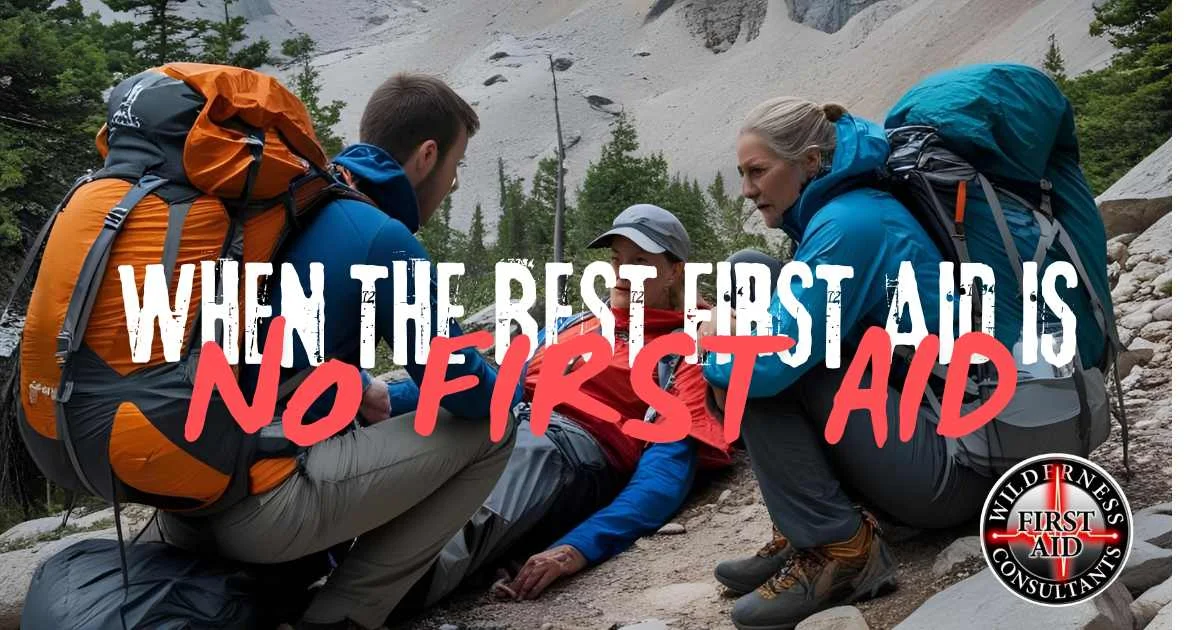
That said… we’d really prefer you never have to use it. (And no — we’re not suggesting you stand there while someone leaks like a busted water tank.)
But the best first aid scenario? No incident in the first place. And that usually comes down to a little common sense and a couple of very important P’s.
The Australian bush is beautiful, unpredictable, and occasionally very interested in killing your weekend plans. For many outdoor adventurers, that unpredictability is part of the appeal. Most people either:
A) manage the risks, or
B) ignore them and hope for the best.
I strongly recommend Option A.
Because while a little risk makes things exciting, uncontrolled risk is how you end up becoming “that story” told around future campfires.
In the outdoors, incidents usually come down to three things:
- Unsafe conditions
- Reckless decisions
- Poor judgement
Reducing risk means:
- stopping incidents before they happen,
- reducing the severity when they do,
- and improving the odds of a good outcome.
Or more simply:
1. Prevention
2. Preparedness
3. Providing First Aid
The first two are where the magic happens.
Research the conditions
“Send it” is not a weather forecast. Avoid heading out during extreme weather, flood season, bushfire season, or other conditions likely to turn your adventure into a rescue documentary.
Know where you’re going
If you’re leading a group, do a recon trip. Match the terrain to your group’s abilities and stick to the planned route. Getting lost burns daylight, energy, and morale at impressive speed.
Have a realistic itinerary
Build in buffer time for weather, injuries, wrong turns, closed tracks, and the occasional group member who thinks “5-minute break” means “full Netflix season.”
Know your people
Pay attention to previous injuries, medical conditions, fitness levels, energy, and mood. Tired people make bad decisions. Hungry people make worse ones.
Bring the right gear
Research the environment properly. Heat, cold, terrain, and activity all matter. Check your equipment before the trip — not halfway through it. And for the love of your future blisters, wear your boots in BEFORE the adventure.
If you’re off-track, long pants and gaiters are cheap insurance against snakebite.
Prepare yourself physically
The bush doesn’t care how motivated you are. Overexertion causes a huge number of wilderness emergencies. Train appropriately and allow time to acclimatise.
Carry proper first aid supplies
A wilderness first aid kit should be more than a glorified zip-up placebo. At minimum, carry supplies for serious bleeding and snakebite management. A good kit can stop a minor problem becoming a helicopter problem.
Get trained
A first aid kit without training is basically an expensive pillow. In remote areas, help may be hours — or days — away. Wilderness First Aid training teaches you how to manage patients when the cavalry isn’t coming anytime soon.
Pack extra food and water
Enough for an extra night or two is smart. One clever student showed me their emergency snacks wrapped in layers of electrical tape so they wouldn’t eat them early. That’s commitment. Slightly unhinged commitment, but commitment nonetheless.
Maintain situational awareness
Pay attention as you travel. Notice landmarks, campsites, water sources, access points, and hazards. In an emergency, sometimes the smartest move is retreating to familiar ground.
Carry reliable communications
“Off-grid” should not mean “completely uncontactable.” Batteries fail. Phones drown. Weather interferes. Have backup communication options whenever possible.
And the simplest safety system of all? Leave your trip plans with someone reliable. Tell them where you’re going, when you’ll return, and when to raise the alarm if you don’t.
Because once distance, terrain, gullies, ridges, and bad weather get involved, rescue becomes slower, harder, and far less convenient.
During my years as an outdoor educator, I was fortunate to avoid major wilderness incidents. You could call that luck.
I call it preparation.
Eventually, Lady Luck clocks off. When she does, good planning, good judgement, and good preparation can make the difference between an inconvenient story… and a tragedy.
Christie Pisani
Manager, Wilderness First Aid Consultants, 2024